
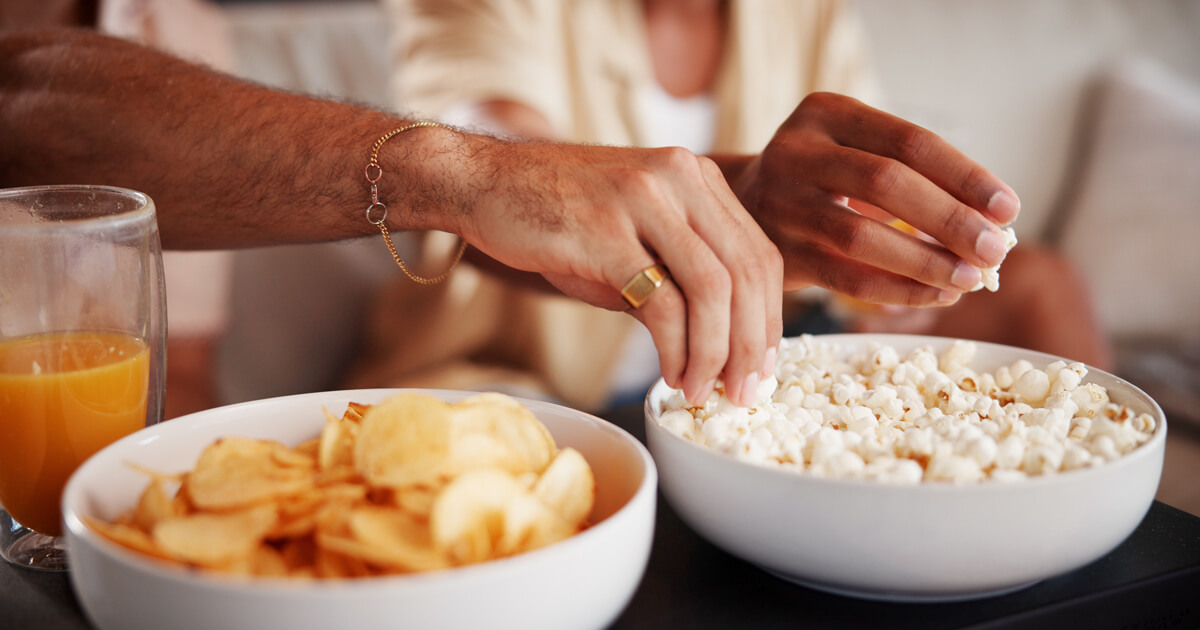
How Snacking Throughout the Day Affects Your Teeth Differently Than Meals
A handful of crackers mid-morning, a snack in the car, a few sips of a sweet coffee drink through the afternoon, something small while making dinner… None of it feels like much, and the total might be less than a single big meal. But when it comes to your teeth, how often you eat matters at least as much as what you eat.
At Consultants in Dental Aesthetics, some of the most frustrated patients we meet are people who eat well overall yet keep getting cavities, and frequent grazing is often a big part of the picture.
What happens in your mouth after you eat
Every time you eat or drink anything containing sugar or starch, the bacteria in your mouth feed on it and produce acid. That acid lowers the pH on the surface of your teeth, and once it drops far enough, minerals begin to leave the enamel.
When this happens often enough, it can lead to a cavity. Fortunately, your saliva goes to work right away, neutralizing the acid and carrying minerals back into the enamel. It can take 30 minutes to an hour after the last bite for your mouth to return to a more protective state.
Why frequency matters more than quantity
If you eat three meals a day, your teeth go through three acid cycles, each followed by a recovery period in which saliva helps restore minerals to the enamel. If you snack or sip between those meals, every one of those moments restarts the clock.
Six or seven small snacks spread across the day can keep your mouth in an acidic state for much of the day, leaving the enamel little time to recover. The same amount of sugar tends to do more damage when it is spread out than when it is eaten in one sitting.
Slowly sipping a sweetened drink is one of the most damaging habits, because each sip is a fresh acid attack.
The snacks that cause the most trouble
Not all snacks are equal. The ones that linger are the ones that do the most harm:
- Sticky foods like dried fruit, chewy fruit snacks, gummy sweets, and chewy snack bars that cling to the grooves of the teeth
- Starchy, crunchy snacks such as crackers, which can break down into sugars and pack between teeth
- Sweetened coffee, tea, soft drinks, and sports drinks sipped over a long stretch
- Smoothies and fruit juices, which combine sugar with acid
- Sour or citrus-flavored candies, which add their own acid to the mix
Smarter ways to snack
You don’t have to give up snacking to protect your teeth. Grouping snacks closer to meals, rather than spacing them out, reduces the number of acid cycles your teeth face. Choosing snacks that are gentler on enamel, such as cheese, nuts, plain yogurt, and crunchy raw vegetables, helps too, and cheese in particular can help balance acidity.
Finishing with a glass of water or chewing sugar-free gum can help clear food and boost saliva flow. If you’ve eaten something acidic, wait about 30 minutes before brushing so you aren’t scrubbing softened enamel.
Who should be extra mindful
Some people are more vulnerable to the effects of frequent snacking. These groups may face a higher risk and benefit from a little extra planning:
- Children who graze through the day
- Anyone with a dry mouth from medications or health conditions
- Patients wearing clear aligners that can trap sugar against the teeth
- Athletes who sip sports drinks during long sessions
- People working night shifts who snack to stay alert
How your dental team can help
At Consultants in Dental Aesthetics, we can often spot the earliest stage of damage from frequent snacking, which can show up as chalky white spots on the enamel, often before a cavity forms. At that stage, changes to your routine along with fluoride treatments can help the enamel recover.
Sealants can protect the grooves of back teeth where snack debris collects, and we can help you build a snacking pattern that fits your life while helping to protect your smile.
Snacking itself is not the problem. The all-day pattern of small bites and sweet sips that never gives your teeth a break is. A few simple changes to timing and choices can make a real difference, especially if cavities have been a recurring frustration.
If you would like help figuring out what might be affecting your teeth, the team at Consultants in Dental Aesthetics is here for you. Contact us to book your next appointment.