
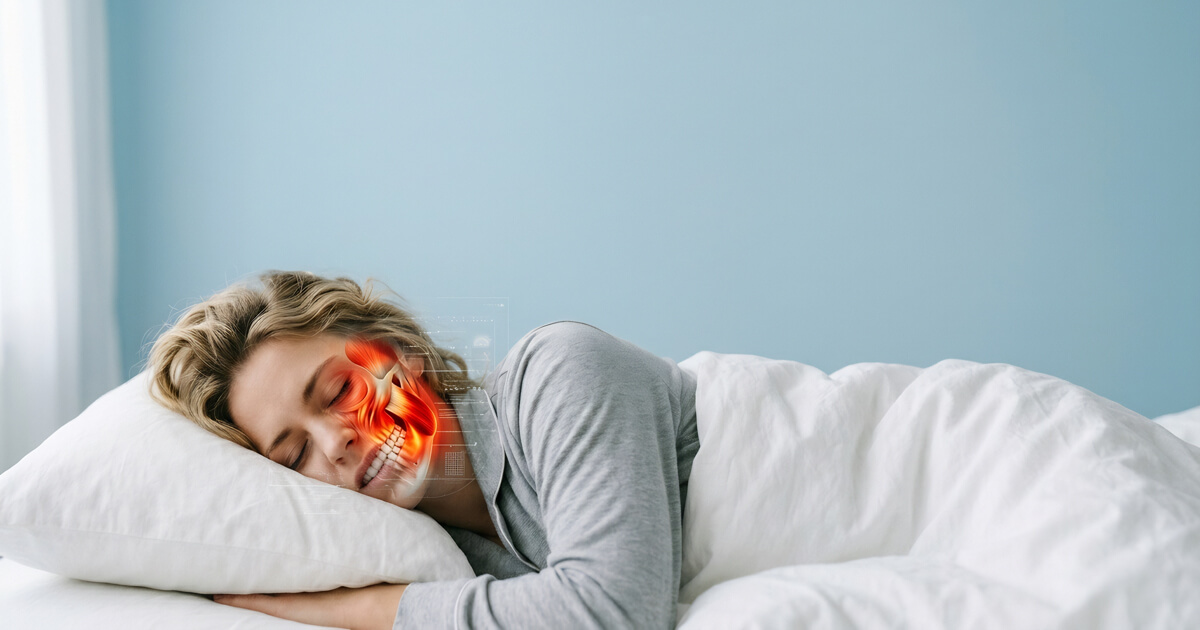
The Hidden Habit of Teeth Grinding and How to Spot the Signs
Most people who grind their teeth wouldn’t be able to tell you they do so. The habit often happens during sleep, or in moments of concentration during the day, and the person doing it is the last to find out. Often a partner hears it first, or a dentist notices the evidence before the patient feels a thing.
At Consultants in Dental Aesthetics, spotting the early signs of grinding is one of the more valuable things we do during a routine check-up, because the damage it causes builds slowly and quietly.
What teeth grinding actually is
Teeth grinding, known as bruxism, is the repeated clenching or sliding of the teeth against each other beyond normal chewing. Sleep bruxism happens at night, while awake bruxism is usually a clenching habit that shows up during stress or focused work.
The forces involved can be considerably greater than those of everyday chewing, and they are applied to the teeth for much longer than a typical meal. Factors that may contribute include stress and anxiety, disrupted sleep or sleep-related breathing problems, an uneven bite, caffeine and alcohol in the evening, and certain medications.
Signs you might be grinding without knowing it
Because grinding happens outside your awareness, the clues tend to show up as symptoms that seem unrelated:
- A sore or tired jaw when you wake up
- Dull headaches that start at the temples, especially in the morning
- Teeth that feel sensitive to cold or pressure for no obvious reason
- Teeth that look flatter, shorter, or chipped along the edges
- Scalloped edges along the sides of the tongue or a ridge inside the cheeks
- Clicking or popping in the jaw joint, or difficulty opening wide
- Pain that feels like an earache, with no obvious ear-related cause
- A partner who mentions hearing a grinding or tapping sound at night
What your dentist can see that you cannot
Even when symptoms are mild, grinding leaves a trail. During an exam, we look for:
- Flattened wear surfaces on the biting edges of the teeth
- Thinning enamel that lets the yellower layer underneath show through
- Tiny cracks or fracture lines, small notches near the gumline (which may be linked to heavy biting forces)
- Fillings or crowns that are chipping or failing sooner than they should
We may also notice that the muscles along the jaw are larger or more tender than usual. Putting these clues together can help us identify grinding early, often well before a tooth cracks or breaks.
Why catching it early matters
Enamel does not grow back. Ongoing grinding can gradually wear more of it away, and over time that can lead to cracked teeth, increased sensitivity, and strain on the jaw muscles and joints that becomes harder to treat.
Restoring teeth worn down by years of grinding is far more involved than preventing the wear in the first place. Recognizing the habit early can help protect both your teeth and your budget.
Ways to help stop teeth grinding
The most common first step is a custom-fitted night guard (also called an occlusal splint), a thin appliance worn during sleep that helps cushion the force of grinding and protects the teeth from wearing against each other.
Unlike over-the-counter versions, a guard made from an impression of your teeth is designed to fit closely, making it more comfortable to wear consistently.
Beyond that, managing stress, improving sleep habits, and limiting caffeine and alcohol in the evening can reduce how often grinding happens.
During the day, a simple reminder to keep your lips together and your teeth apart can help break a clenching habit. If your bite is uneven or a sleep-related breathing problem is suspected, we can discuss further options or referrals.
Teeth grinding is one of the most common habits we see, and one of the easiest to miss. The encouraging news is that once it is identified, there are simple, effective ways to help protect your teeth.
If you have noticed a sore jaw, morning headaches, or teeth that seem to be changing shape, let the team at Consultants in Dental Aesthetics take a look. Contact us to book an appointment.